
Auto Parts Marketplace Development
Businesses exploring a auto parts marketplace usually want a product that customers understand instantly while the operation behind it stays manageable. For this model, marketplace operations and a clear admin panel shape most of the development scope.
CloneAppTech designs and builds original apps, dashboards and integrations around your brand, pricing and operating rules.
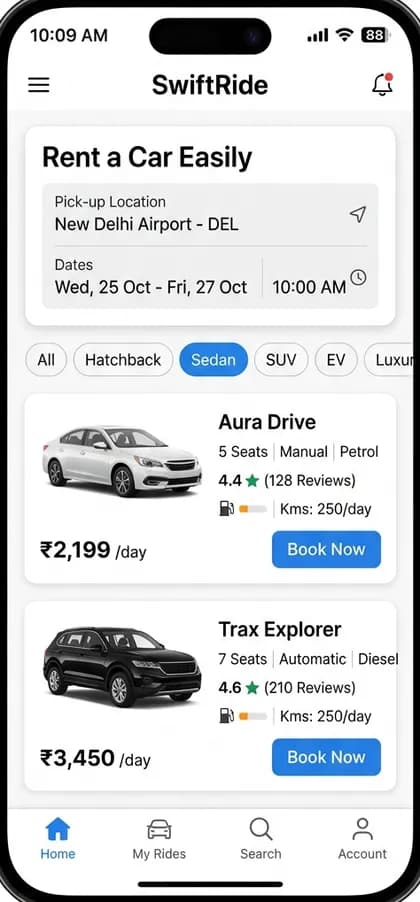
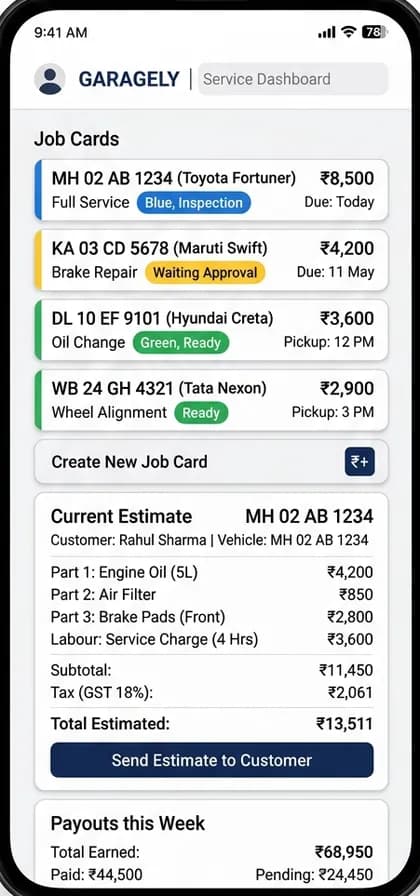
Business model
How a auto parts marketplace makes money
Most auto parts marketplace projects follow one of three models: used-car marketplace, rental and car sharing, vehicle services. Commission on washes, repairs, roadside help or fuel delivery. The right choice depends on who owns inventory or supply, how you earn per transaction and how much operational control you want.
Used-car marketplace
Listing fees, dealer plans or inspection services.
Rental and car sharing
Hourly or daily rentals with deposits.
Vehicle services
Commission on washes, repairs, roadside help or fuel delivery.
Target audience & use cases
Who this solution is for
- Operators digitising an existing service
- Mobility and service start-ups launching city by city
- Enterprises managing transport or field teams
- Existing automotive & rentals businesses replacing manual or outdated systems
Core application features
What the product needs on day one
- Vendor onboarding with document verification
- Per-vendor commission and payout rules
- Vendor-level catalogue and order dashboards
- Ratings that affect vendor visibility
- Vehicle profiles and documents
- Service history and reminders
- Inspection checklists with photos
- Telematics or charger status
- Inspection reports
- Availability calendars
- Deposit holds
- Document verification
Apps & user roles
Features for every role involved
Only the roles that apply to this business model are included.
01
Customer app
- Vehicle search and comparison
- Book rental, test drive or service
- Documents and payments
- Trip or service tracking
02
Dealer / host / mechanic app
- Inventory or availability
- Job cards and estimates
- Payouts
03
Admin panel
- Inspection workflows
- Deposits and damage claims
- Partner onboarding
Workflow
How a typical marketplace operations flow runs
- 1
Customer finds a vehicle or service
- 2
Availability, price and deposit are shown
- 3
Documents are verified
- 4
Handover or service happens with checklists
- 5
Return, inspection and settlement complete
Technology & integrations
Technical considerations
- Split payments and vendor payouts are easiest with a gateway that supports marketplace settlements; otherwise a ledger and manual payout process are required.
- Telematics, OCPP chargers and vehicle data APIs vary by vendor and region.
- Keyless and telematics integrations depend on hardware vendors.
- VIN decoding and vehicle data APIs.
- Damage photos with timestamps.
- EV charger protocols such as OCPP for charging apps.
Customisation options
Make it yours
- Your brand identity, colours, typography and app icon
- Business rules for marketplace operations configurable from the admin panel
- Languages, currencies and regional tax settings
- Payment gateways and payout methods available in your country
- Commission, fee or subscription structure
- Optional modules added in later phases
Development scope
A typical first release includes the customer app, dealer / host / mechanic app, admin panel, a backend API, cloud hosting setup and the integrations for marketplace operations and vehicle data. Optional modules are planned into later phases.
Factors affecting pricing
What drives the cost of a auto parts marketplace
Medium-level projects typically start from ₹1.5 Lakh ($1,800). Your exact quote depends on these factors.
- Vendor management and split settlements
- Hardware and data integrations
- Marketplace vs. rental vs. service
- Hardware integrations
- Inspection tools
- Insurance integrations
- Fleet scale
Project phases
Estimated phases, testing and launch
Durations are agreed after discovery; testing, deployment and maintenance are part of every plan.
Phase 1
Discovery
Confirm the auto parts marketplace business model, user roles and must-have features.
Phase 2
Design
Original user flows and interface design for each app and the admin panel.
Phase 3
Build
Mobile apps, backend APIs and marketplace operations, vehicle data.
Phase 4
Test
Functional, device and load testing of critical flows.
Phase 5
Launch
Store submission, cloud deployment and monitoring.
Phase 6
Improve
Maintenance and roadmap features based on real usage.
FAQs
Auto Parts Marketplace questions
How much does it cost to build a auto parts marketplace?+
Cost depends on the roles you need (customer app, dealer / host / mechanic app, admin panel), the depth of marketplace operations, integrations and platforms. Medium-level builds typically range from ₹4–10 Lakh ($4,800–$12,000) for multi-role apps, and from ₹1.5 Lakh ($1,800) for a focused first release; we confirm the exact quote after reviewing your requirements.
How do vendors get paid?+
Through scheduled payouts after commission is deducted, either automatically via a marketplace-capable gateway or through a reconciled payout report.
Can it read data from vehicles?+
With telematics hardware or OEM APIs where available.
How are damages handled?+
Before/after photo checklists, deposit holds and a claims workflow in the admin panel.
Related
Explore related solutions
Related app models
Related categories
Development services
Next steps
Free consultation
Planning a auto parts marketplace?
Tell us your market and must-have features. We'll suggest a realistic first release for your auto parts marketplace and the next steps.