
Coinbase-Style Crypto Exchange App Development
A Coinbase-style crypto exchange app sits within cryptocurrency & web3 and focuses on exchange interfaces, wallets, NFT platforms and on-chain tooling. The product has to work for every role involved — user app, creator / issuer tools, admin panel — and its most important capability is clinical data handling.
It is inspired by the publicly known Coinbase business model, but it is not affiliated with, endorsed by or a copy of Coinbase. CloneAppTech designs and builds original apps, dashboards and integrations around your brand, pricing and operating rules.
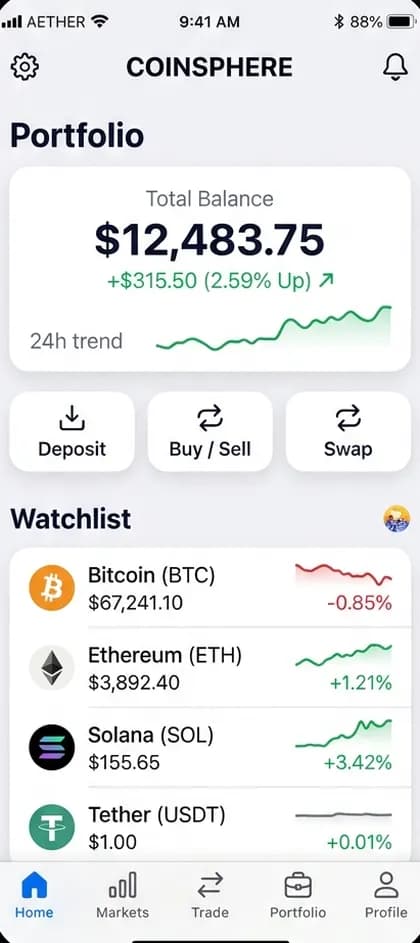
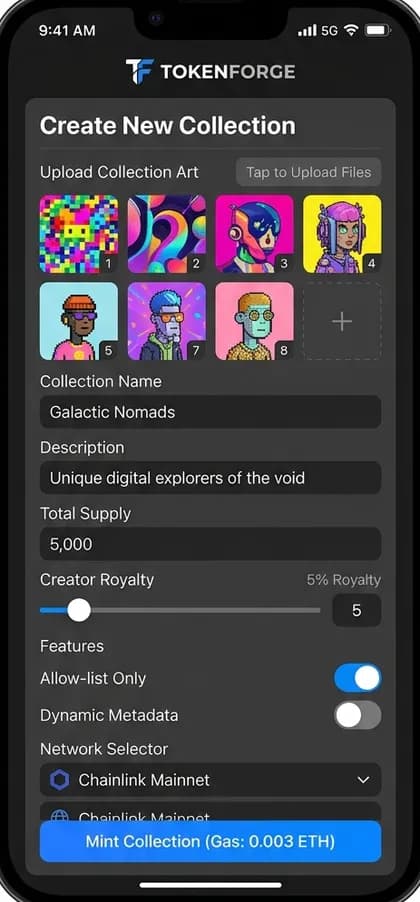
Business model
How a Coinbase-style crypto exchange app makes money
Most Coinbase-style crypto exchange app projects follow one of three models: exchange interface, non-custodial wallet or dapp, enterprise blockchain. Trading fees on a licensed exchange engine or liquidity partner. The right choice depends on who owns inventory or supply, how you earn per transaction and how much operational control you want.
Exchange interface
Trading fees on a licensed exchange engine or liquidity partner.
Non-custodial wallet or dApp
Users hold keys; revenue from swaps or premium tools.
Enterprise blockchain
Traceability, tokenised loyalty or identity for businesses.
Target audience & use cases
Who this solution is for
- Financial and professional service firms
- SaaS founders and enterprise teams
- Operations leaders replacing manual processes
- Existing cryptocurrency & web3 businesses replacing manual or outdated systems
Core application features
What the product needs on day one
- Consent capture and records access logs
- Prescription and report storage
- Teleconsult or appointment flows
- Role-based access for clinicians
- Wallet connection
- Transaction signing
- Portfolio tracking
- NFT minting and listing
- Gas estimation
- Tax exports
Apps & user roles
Features for every role involved
Only the roles that apply to this business model are included.
01
User app
- Wallet connect or custody account
- Portfolio and transaction history
- Buy, sell, swap or mint
- Security settings
02
Creator / issuer tools
- Collection or token setup
- Royalties
- Allow-lists
03
Admin panel
- KYC and compliance
- Listings
- Risk monitoring
Workflow
How a typical clinical data handling flow runs
- 1
User connects a wallet or completes KYC
- 2
Assets and balances are read from chain or exchange
- 3
User signs a transaction
- 4
Transaction is broadcast and confirmed
- 5
History and tax data update
Technology & integrations
Technical considerations
- Encrypt clinical data, keep audit trails and align hosting with applicable health-data regulations.
- Smart contracts need independent audits before handling value.
- Custodial models require licensed custody partners.
- Node providers and indexers are recurring costs.
- App store policies restrict some crypto features.
Compliance note: Crypto regulation changes quickly and differs by country. Obtain legal advice on licensing, KYC/AML and tax reporting.
Customisation options
Make it yours
- Your brand identity, colours, typography and app icon
- Business rules for clinical data handling configurable from the admin panel
- Languages, currencies and regional tax settings
- Payment gateways and payout methods available in your country
- Commission, fee or subscription structure
- Optional modules added in later phases
Development scope
A typical first release includes the user app, creator / issuer tools, admin panel, a backend API, cloud hosting setup and the integrations for clinical data handling. Optional modules are planned into later phases.
Factors affecting pricing
What drives the cost of a Coinbase-style crypto exchange app
Medium-level projects typically start from ₹1.5 Lakh ($1,800). Your exact quote depends on these factors.
- Security, audit and integrations
- Custodial vs. non-custodial
- Chains supported
- Smart contract work and audits
- Exchange or liquidity integrations
- Compliance tooling
Project phases
Estimated phases, testing and launch
Durations are agreed after discovery; testing, deployment and maintenance are part of every plan.
Phase 1
Discovery
Confirm the Coinbase-style crypto exchange app business model, user roles and must-have features.
Phase 2
Design
Original user flows and interface design for each app and the admin panel.
Phase 3
Build
Mobile apps, backend APIs and clinical data handling.
Phase 4
Test
Functional, device and load testing of critical flows.
Phase 5
Launch
Store submission, cloud deployment and monitoring.
Phase 6
Improve
Maintenance and roadmap features based on real usage.
FAQs
Coinbase-Style Crypto Exchange App questions
How much does it cost to build a Coinbase-style crypto exchange app?+
Cost depends on the roles you need (user app, creator / issuer tools, admin panel), the depth of clinical data handling, integrations and platforms. Medium-level builds typically range from ₹4–10 Lakh ($4,800–$12,000) for multi-role apps, and from ₹1.5 Lakh ($1,800) for a focused first release; we confirm the exact quote after reviewing your requirements.
Is the app compliant with health regulations?+
Compliance depends on your processes as well as software. We build the technical safeguards and recommend legal review.
Is this an official Coinbase product?+
No. CloneAppTech is an independent development company. Coinbase is referenced only to describe a business model; all trademarks belong to their owners.
Do I need a licence to run an exchange?+
In most jurisdictions, yes — virtual asset service providers are increasingly regulated.
Related
Explore related solutions
Related app models
Related categories
Development services
Next steps
Free consultation
Planning a Coinbase-style crypto exchange app?
Tell us your market and must-have features. We'll suggest a realistic first release for your coinbase-style crypto exchange app and the next steps.